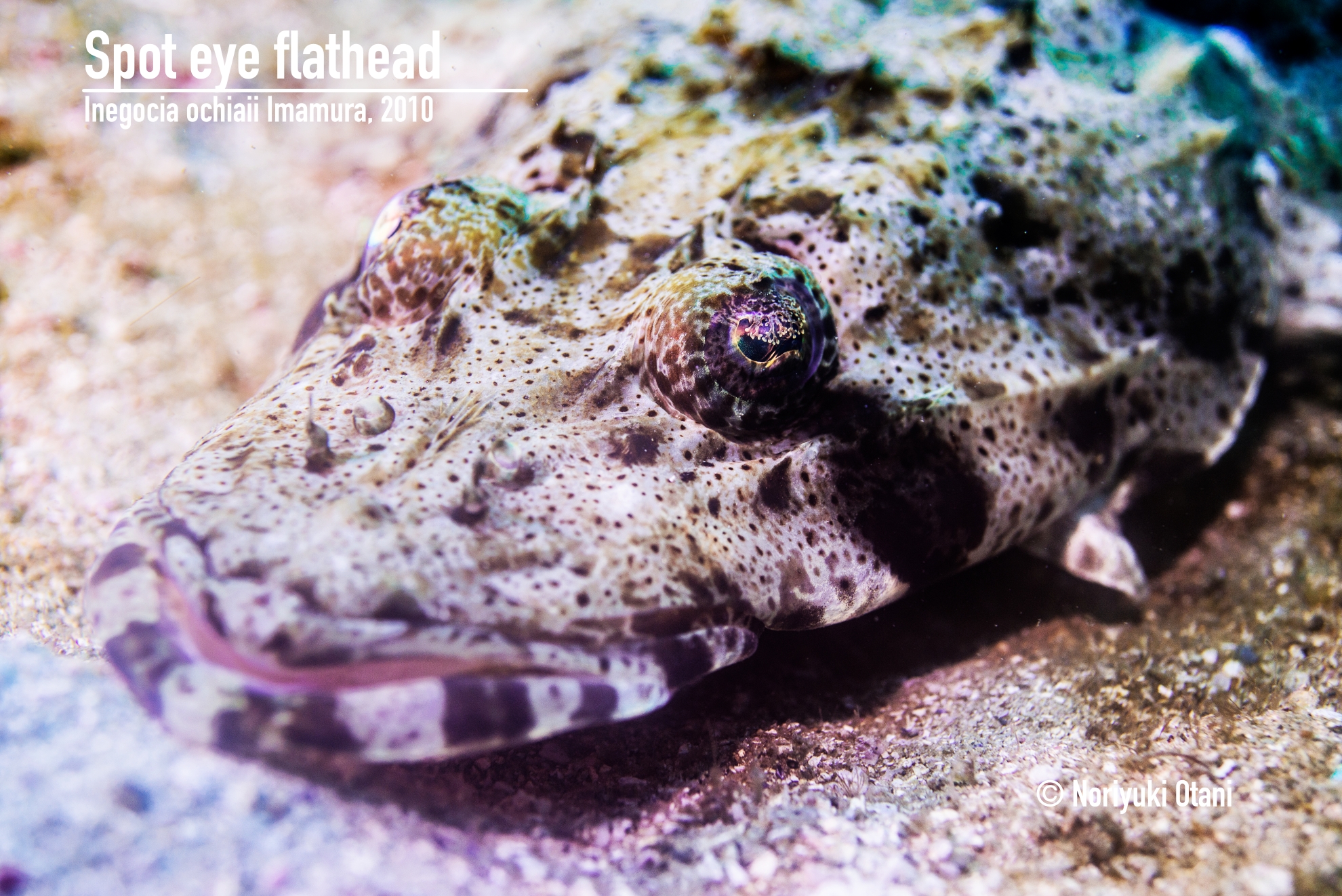
It is seen at shallow coral reef.
Unexpectedly the swimming speed is fast.
It swims as crawling on the sandy bottom of the sea floor. The face with big eyes and long proboscis is like a pretty dragon in a cartoon.
Yap, Micronesia. Sept.1st.2016. -2m
Wow!
It is Crocodile Fish (Cymbacephalus beauforti (Knapp, 1973)) ! Is it right? The
answer is correct, and incorrect. This is Spot eye flathead (Inegocia ociaii
Imamura, 2010). It is called “Wani-Gochi” in Japan. “Wani” means
Crocodile. So, it can say “correct”. These two flathead is a very
similar shape. Crocodile Fish has lappets on each eyeball. And has eyebrow
above each eye. Spot eye flathead has lappets also, however, it doesn’t have
eyebrows on each eyeball. Spot eye flathead is found in coastal water more
south of Sagami-Bay in the Pacific side, more south of Wakasa-Bay in Sea of
Japan side. Crocodile Fish is the fish that is seen more south, like Kyushu
or Okinawa. So, the answer is incorrect. Anyway, when I find out a Sopt eye
falthead, I’m fun. I can feel tropical even in the Temperate sea. Kajika, Owase, Mie, Japan. -18m
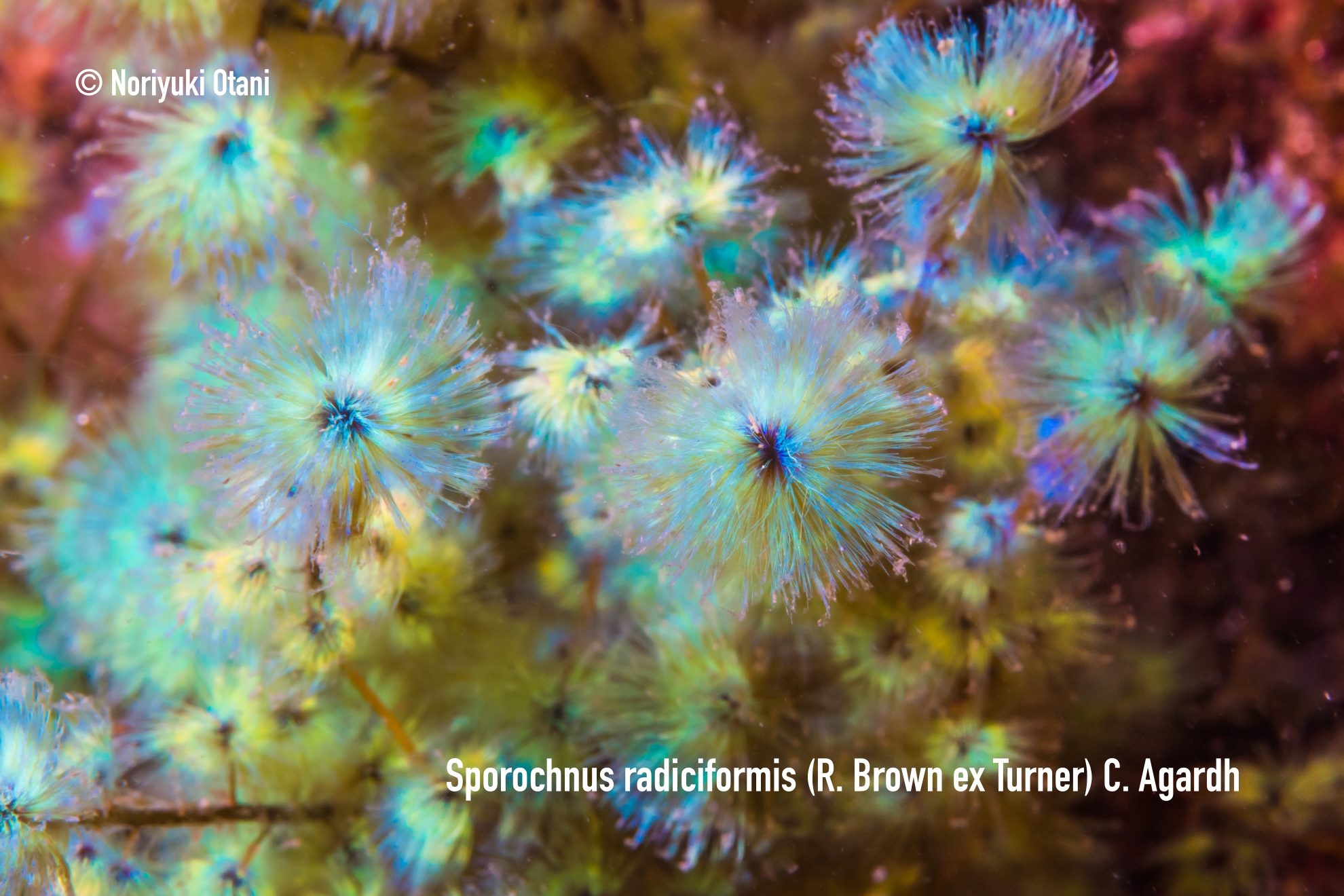
When Spring has come, we can see the algae which have a head like a small Pom Pom Ball on the end of branches. This algae is popular as the background of a photo of fish. This is Sporochnus radiciformis (R. Brown ex Turner) C. Agardh. It belongs to Class Phaeophyceae, Family Sporochnaceae. It is a distributed Pacific side south from Kanto. It is called “Keyari” in Japanese. At the Edo era (1603-1868), when a lord traveled as a corp, decorated spear, named Keyari, is used as the mark of the corp head, so it is called Keyari as the common name. This algae is distributed in Australia also. Please tell me a common name in English. Kushimoto, Wakayama, Japan.
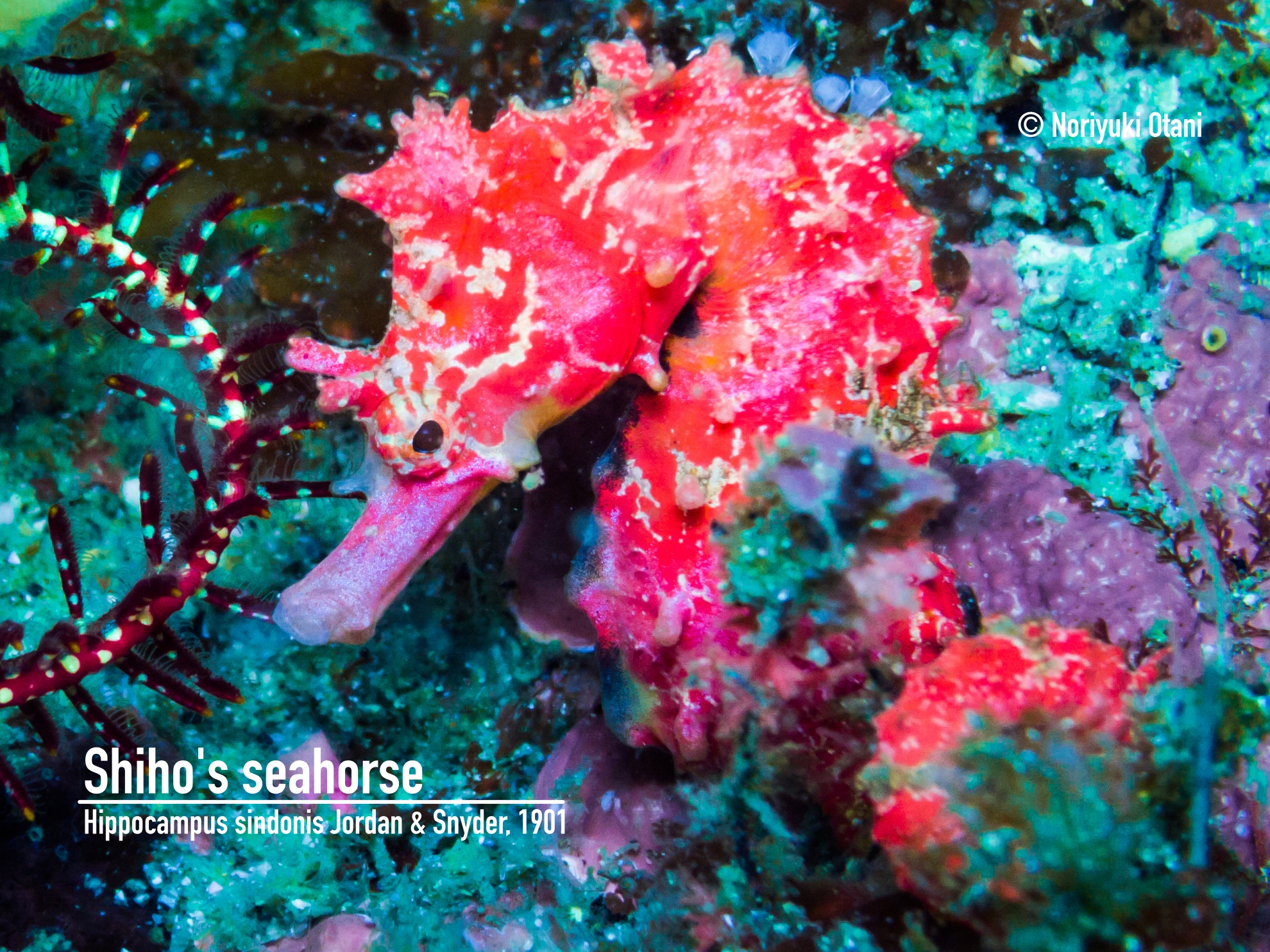
Looking at the seahorse, I always remember a scene from the old science fiction novel “The Maracot Deep (1929)”. This novel is the work of Arthur Conan Doyle, famous for the adventures of Sherlock Holmes. The story is the adventure that marine scientists discover the sunken city Atlantis. I can’t forget is the scene where huge size seahorse eating eyeballs of huge halibut. What’s even scarier, the victim halibut have been sucked its eyeballs by the slender mouth of seahorse. So that I was a child age, it made scare my little heart. The seahorse of the photograph is a small size one called Shiho’s seahorse. This is about only 5 cm, tiny, cute, creature. However, if it would be over 10m….. I think stupid thinking. Lol. Owase, Mie, Japan. -20m
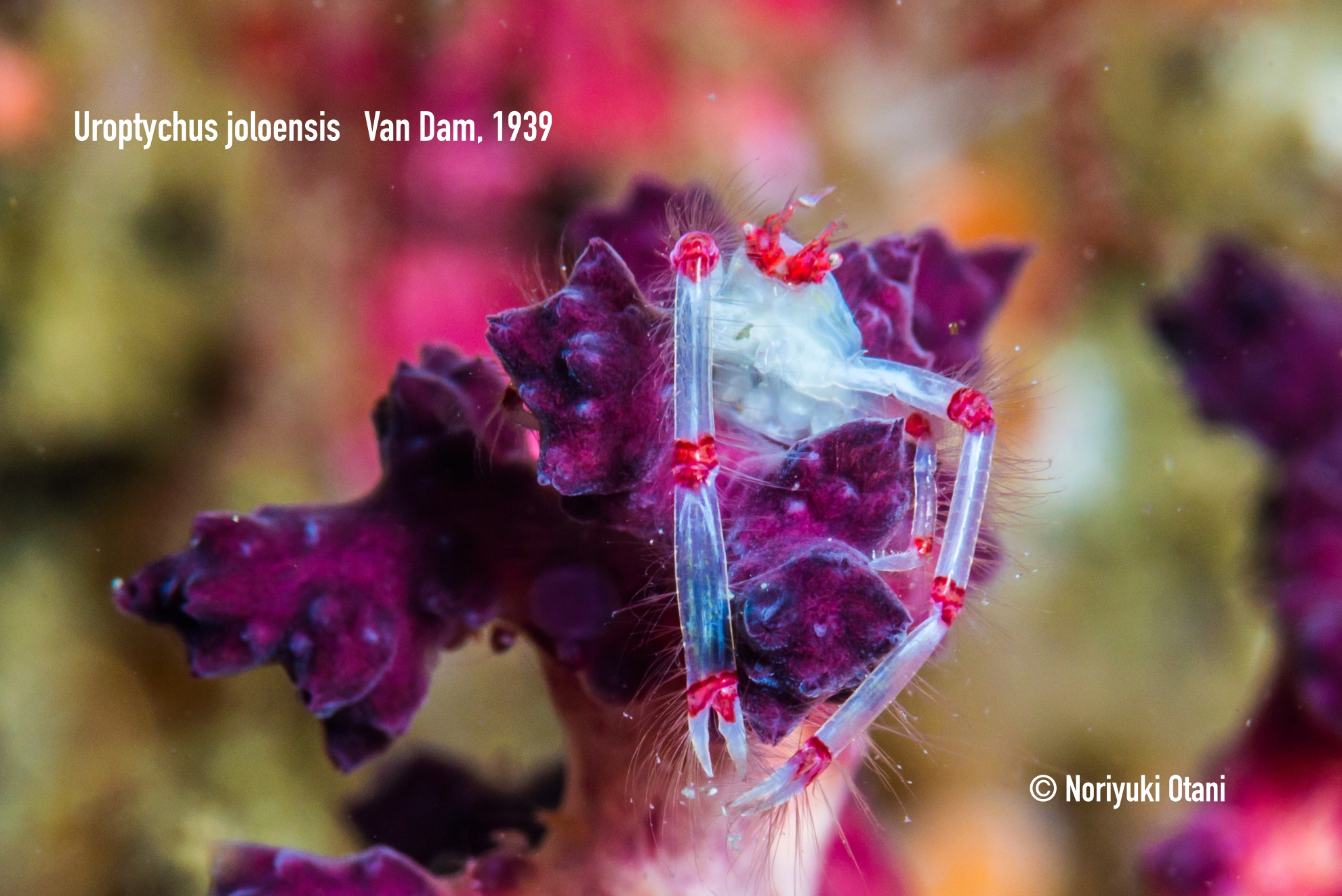
A Uroptychus joloensis on the branch of Chironephthya sp. We have a common name in Japanese for both of them. Uroptychus joloensis is Kudayagi-Moebi. Chironephthya sp. is Kudayagi. Moebi is the shrimp belong to Hippolytidae, and also, it means small shrimp in Japanese. I want to know their common name in English. Although I checked many books and sites on the internet. I can’t find out. Can you help me? By the way. According to SeaLifeBase. they live at Deep-water, depth range 20 – 250 m. Fortunately, this pic was taken -18m. Thanks to shallow water, I could stay at the bottom of the sea a long time to take a photo. Hitotsu –ishi point, Owase, Mie, Japan. Owase is nice place.
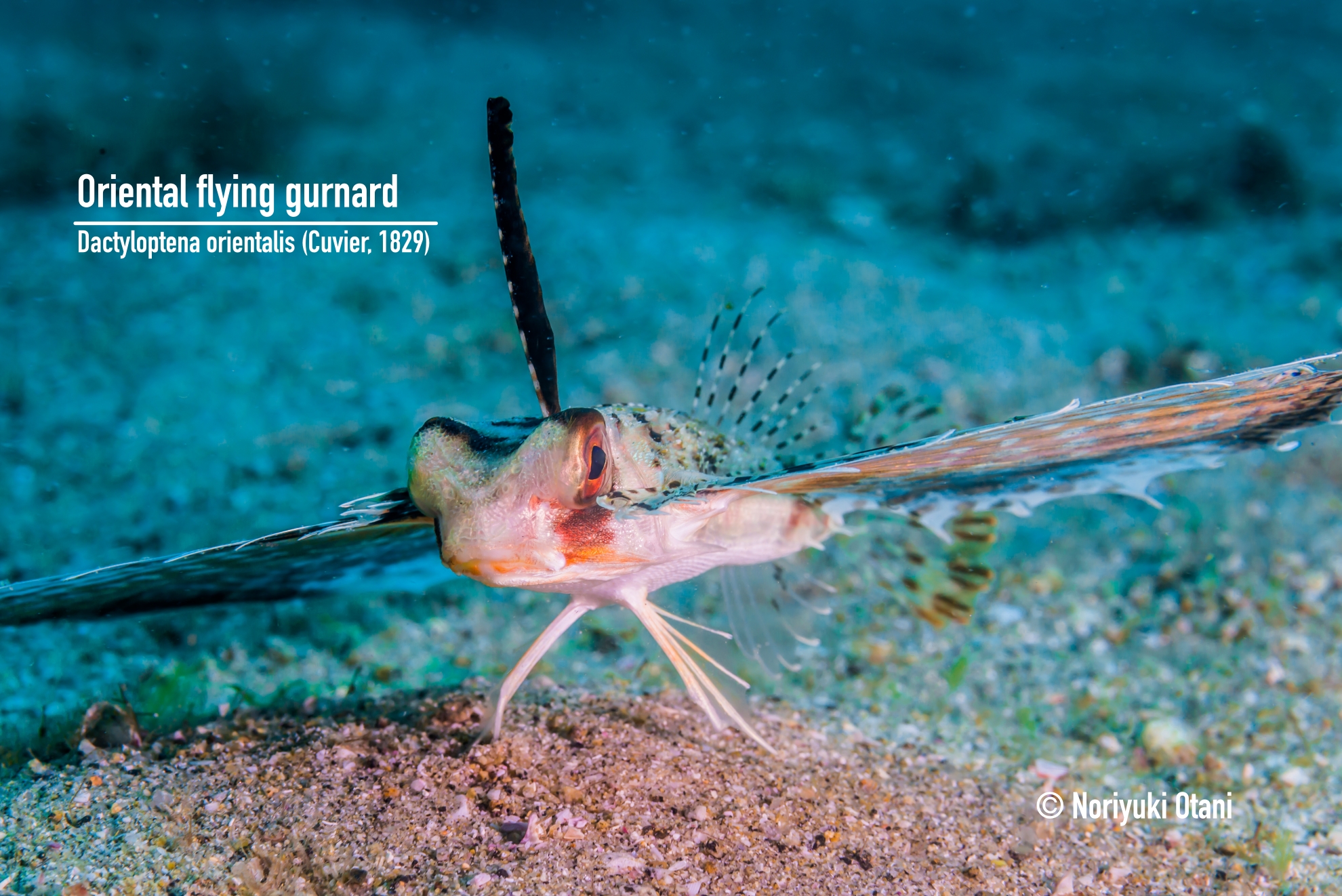
Hi, this photo is not the same as I uploaded the previous time. The description of the photo is different. Thank you, Ron Silver. He taught me the correct name as below. “Based on geographic location, this is Dactyloptena orientalis (Dactylopterus volitans is an Atlantic/Caribbean species” This pic is taken at Owase, Mie, Japan. I re-upload the photo that corrects the name on the picture. Thank you.
Longfin batfish are often seen from late summer
to spring at the artificial reef point, called Gyosho point (The top is -18m. The
bottom is -23m). They come from anywhere with a couple or three. And will go
away to somewhere. At first, they are shy. When they look at divers, they hide
behind the reef blocks. However, after a while, you will be able to shoot from
nearby. It is a fun scene for them to swim behind divers looking for Longfin
batfish. This picture was taken during a “safety stop”. If they feel
like it, they will rise up with divers and see off. Owase, Mie, Japan. -5m
Flying
gurnard has beautiful bright spots on its back, so, there are many photos taken
from the top. But I like this angle. Big chest fins like wings. A dorsal fin
like a vertical tail. Pelvic fins like landing gears. It looks like a fighter
waiting for takeoff. When observing, it runs on the sea floor dexterously and
floats up around 10cm from the sea floor, flying about 1m and lands on the sea
bed. Flight performance doesn’t seem to be very good, yet, it’s cool. Kajika,
Owase, Mie, Japan. -18m
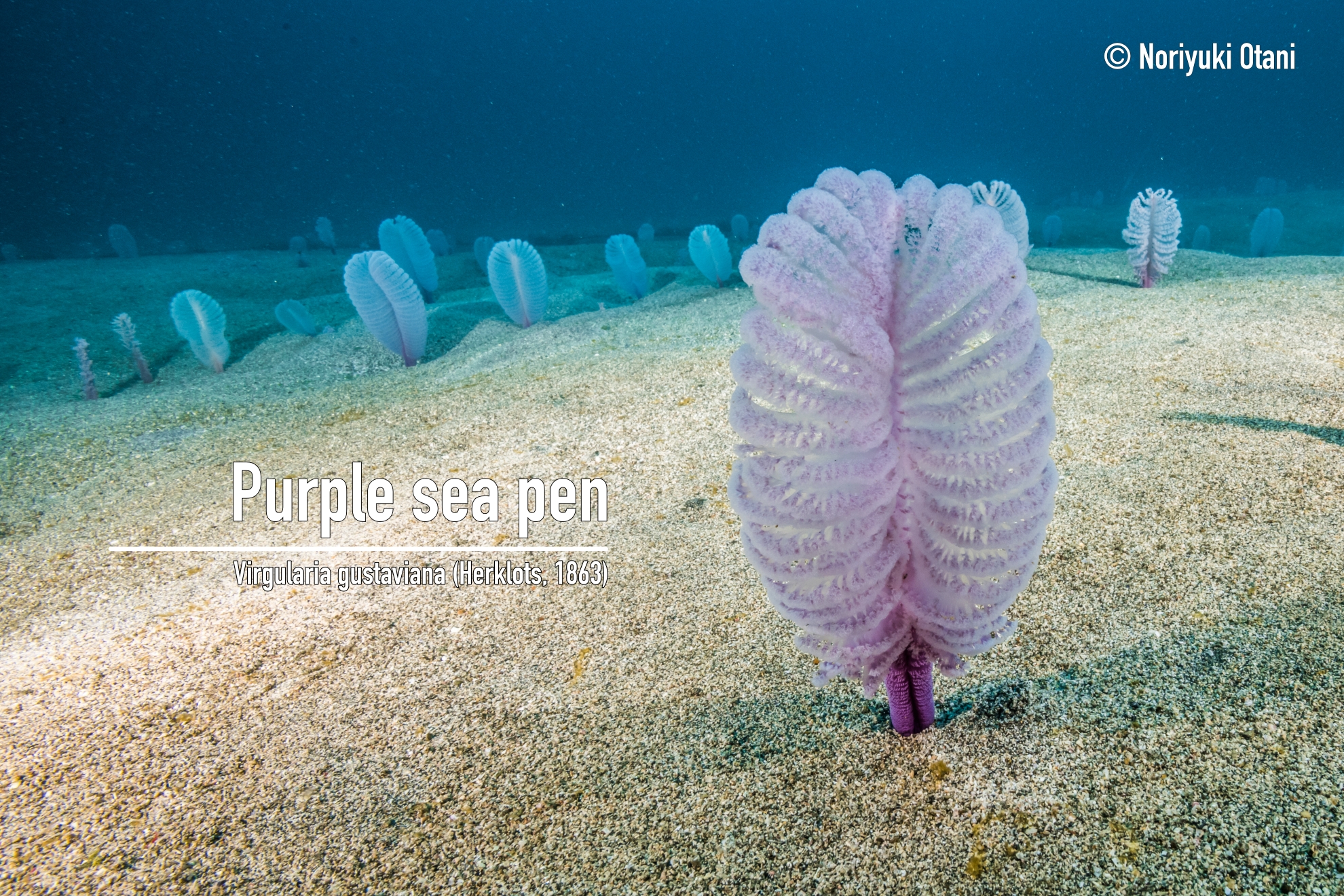
These
rare sea lives that appear to be bird feathers stuck in the bottom of the sand
is called a Sea pen. In Japanese, Umi-Era. The Umi means the sea. Era means
gills. Sea pens belong to octocoralia, so-called soft coral, like a Sea Wip or
tree coral. Ordinarily, this species is, during the day, it hides into the
sand, and when it gets dark, it is appearing from the sand, and spreads its
wings. However, in Hasama, even in the daytime, we can often see the mysterious
sight of the numbers of Sea pens are standing like the forest. Hasama,
Tateyama, Chiba, Japan. -18m.
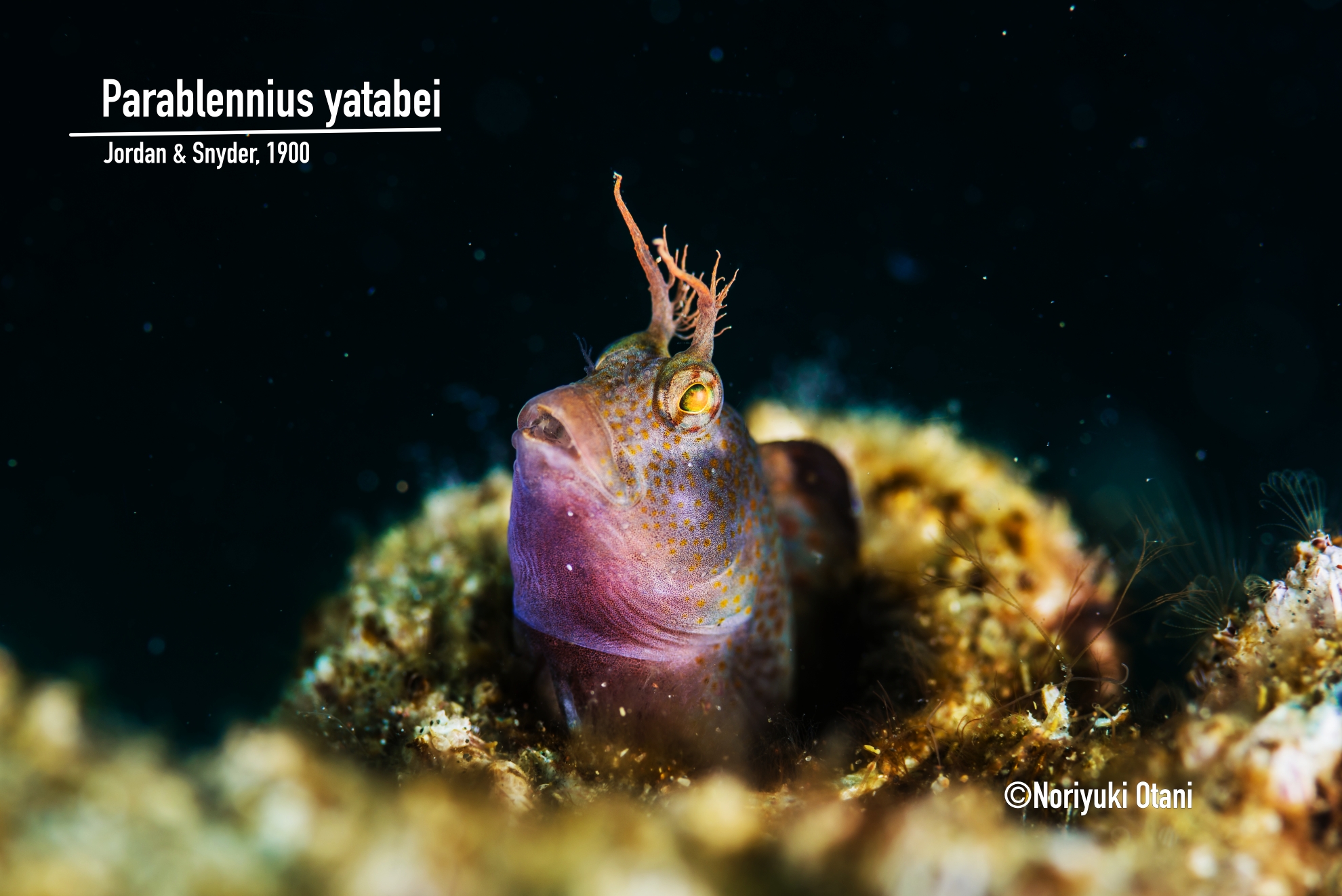
The Yatabe blenny
is a species of combtooth blenny. Two sticks protruding from the head are
marks. It is not difficult to see them at the rocky shore in Japan. However,
this Yatabe blenny lives at the sandy bottom area. So that his home is the hole
of a steel pipe. This pipe is a part of a scaffold that was sunken to make it a
fishing reef. This blenny is about 8-10cm. It seems an adult fish. Osezaki, Izu
peninsula, Japan. -12m.
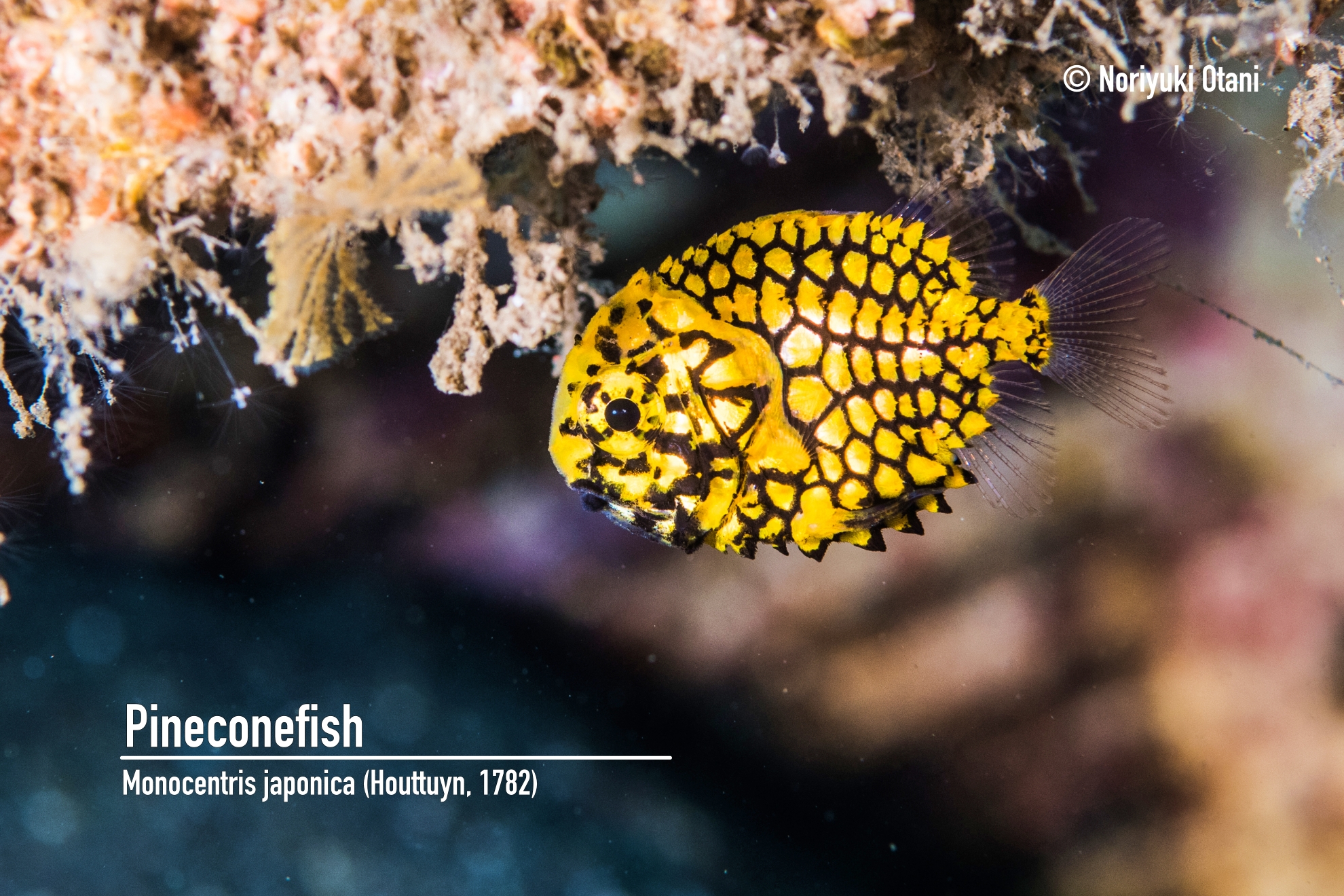
Matsukasa-uo in Japanese. Matsukasa is pine corn. uo is fish
Pinecone fish are displayed as “Luminous fish” in many aquariums. It is interesting to see the area under the eyes of them are fluorescing in the darkened tank. Generally, they live in the deep sea, However, young Pinecone fish are found shallow water where we can watch longtime in Scuba Diving. Many fishes are different shape young age and grownup. There is a lot of fish that the appearance is largely different in child and adult. Although the shape of Pinecone fish is as same as an adult, it is very cute that swimming around under the of rock reef in the tiny body.
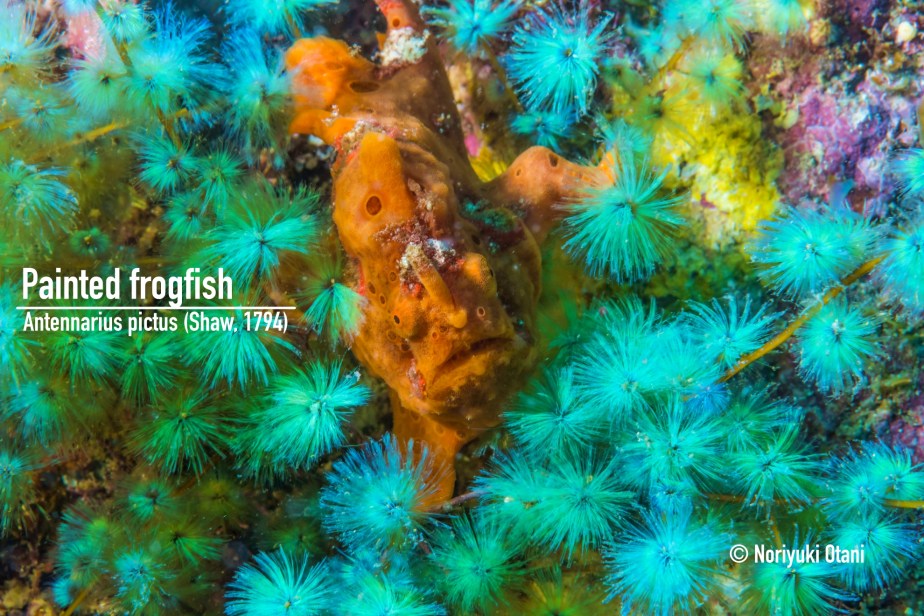
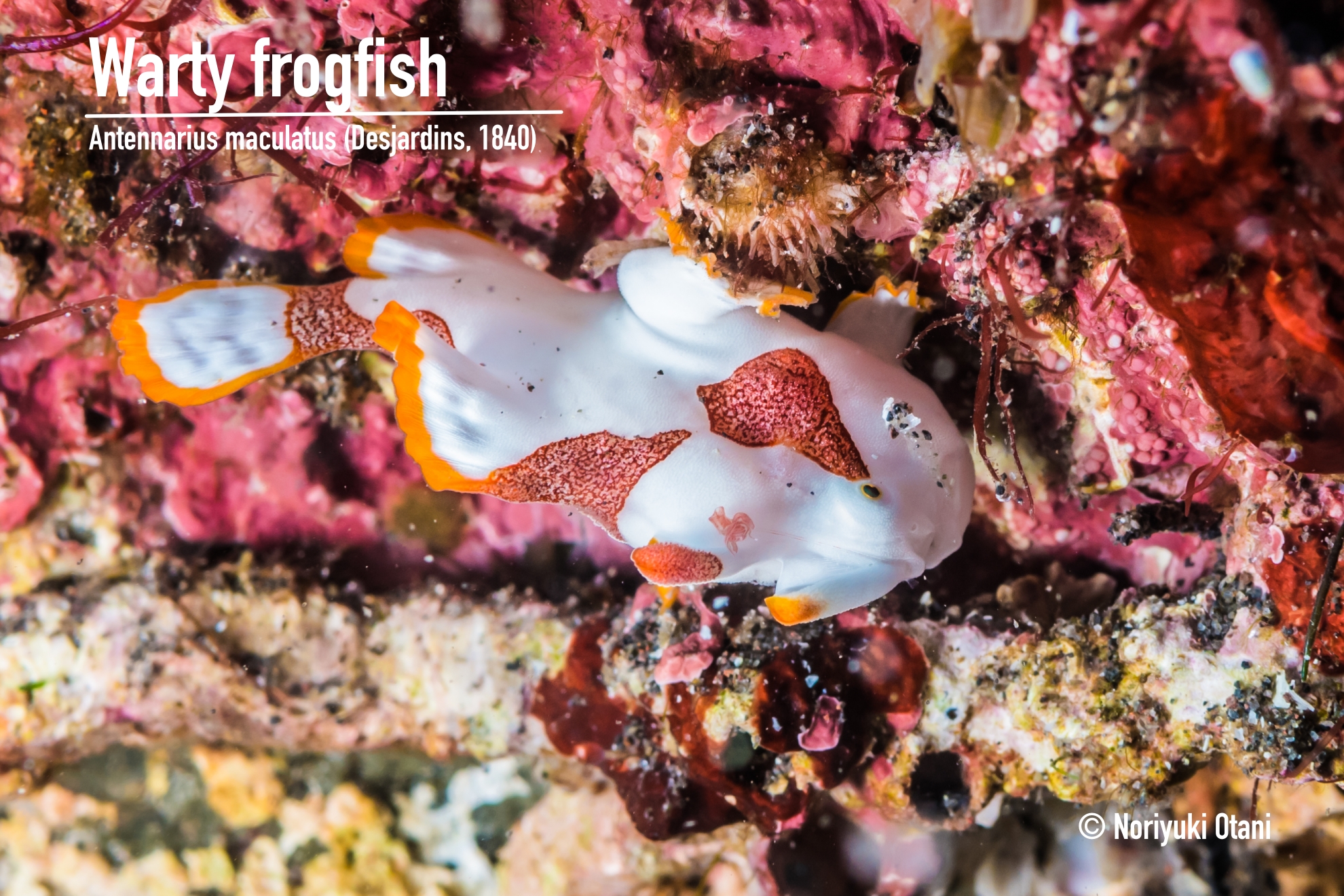
The secret of camouflage. Flashy costunes good for at the flashy background
Frogfish is one of the fish that is hard to find, even though it is in flashy fashion wear. It is a surprise because the colorful pattern mixes with the colors of sponges or rocks. It is said the warty frogfish grows up to 15 cm long. This guy seems very young, the length is under 1cm. Can you see a small esca is at the center of his head? The esuca is a fake bait. Frogfish uses this as a fishing lode. It is very interesting what kind of fish is cached by this tiny frogfish. Osezaki, Izu peninsula, Japan. -12m.



 My Artworks